Constipation in Children: Natural Remedies Every Parent Should Know
Dr. Chomba Chuma
MD & Founder, Velobiotics
Struggling with a blocked-up little one? Explore gentle, evidence-informed constipation in children natural remedies parents can try today.
Constipation in Children: Natural Remedies Every Parent Should Know
If you've ever stood outside a bathroom door, gently coaxing a tearful toddler who hasn't been "number two" in days, you already know how stressful this can be. Many parents start searching for constipation in children natural remedies the moment they realise this isn't just a one-off bad day. The good news is that most childhood constipation is manageable with simple, gentle changes at home — and you don't need to feel alone or panicked while figuring it out.
As a doctor and a parent myself, I've seen how quickly this common issue can shake a family's confidence. Let's walk through what's actually happening in your child's gut, and the gentle, natural approaches that may help restore comfortable, regular bowel movements.
Understanding Why Kids Get Constipated
Constipation in children is incredibly common — some studies suggest it affects up to 30% of children at some point. It's rarely caused by one single thing. Instead, it's usually a combination of small daily habits that add up.
Common contributors include:
- Low fibre intake (think white bread, refined snacks, few vegetables)
- Not drinking enough water, especially in warmer months
- Withholding stool because of a past painful experience
- Changes in routine, like starting school or travelling
- Reduced physical activity
- Recent antibiotic use disrupting the gut's natural rhythm
Up to 30% of children experience constipation at some stage, often linked to low fibre intake, inadequate fluids, or stool withholding behaviours. — American Academy of Pediatrics, HealthyChildren.org
Understanding the root cause is the first step toward any constipation in children natural remedies plan that actually works, rather than just offering a short-term fix.
Constipation in Children Natural Remedies That Actually Work
When parents ask me where to start, I always come back to the basics first. These are the constipation in children natural remedies I recommend trying before anything else, and they're backed by paediatric guidance worldwide.
1. Increase fibre gradually Fruits, vegetables, oats, and legumes support softer, bulkier stools. Introduce fibre slowly to avoid bloating or wind.
2. Boost fluid intake Water helps fibre do its job. Offer water throughout the day rather than only at mealtimes.
3. Encourage regular movement Physical activity stimulates healthy gut motility. Even 20-30 minutes of active play can help.
4. Establish a toilet routine Sitting on the toilet for a few relaxed minutes after meals uses the body's natural post-meal reflex.
5. Consider gut-supportive probiotics Some research suggests specific probiotic strains may help support regularity and overall digestive comfort in children. The BioKid Chewable Probiotics are formulated with this in mind, alongside general gut and immune support.
These approaches work best together, not in isolation. A single extra glass of water rarely solves things on its own — but combined, gentle lifestyle shifts often do.
Fibre, Fluids and Movement: Building Blocks for Regularity
Let's get specific, because "eat more fibre" can feel vague when you're staring at a fussy eater.
Fibre-rich foods kids might actually eat
- Oats with sliced banana
- Soft-cooked sweet potato
- Berries mixed into plain yoghurt
- Wholewheat pasta instead of white
- Lentil soup, blended smooth for younger children
For more lunchbox-specific ideas, our guide on what your child's lunchbox says about their gut health covers practical swaps that support digestion without a daily battle at the table.
Fluids: more than just water
- Water remains the gold standard
- Diluted fruit juice (in moderation) can help some children
- Soups and broths count toward daily fluid intake too
Movement matters more than we think
Sedentary days are increasingly linked with sluggish digestion in children. Encouraging outdoor play, short walks, or even dancing in the lounge can gently stimulate the gut.
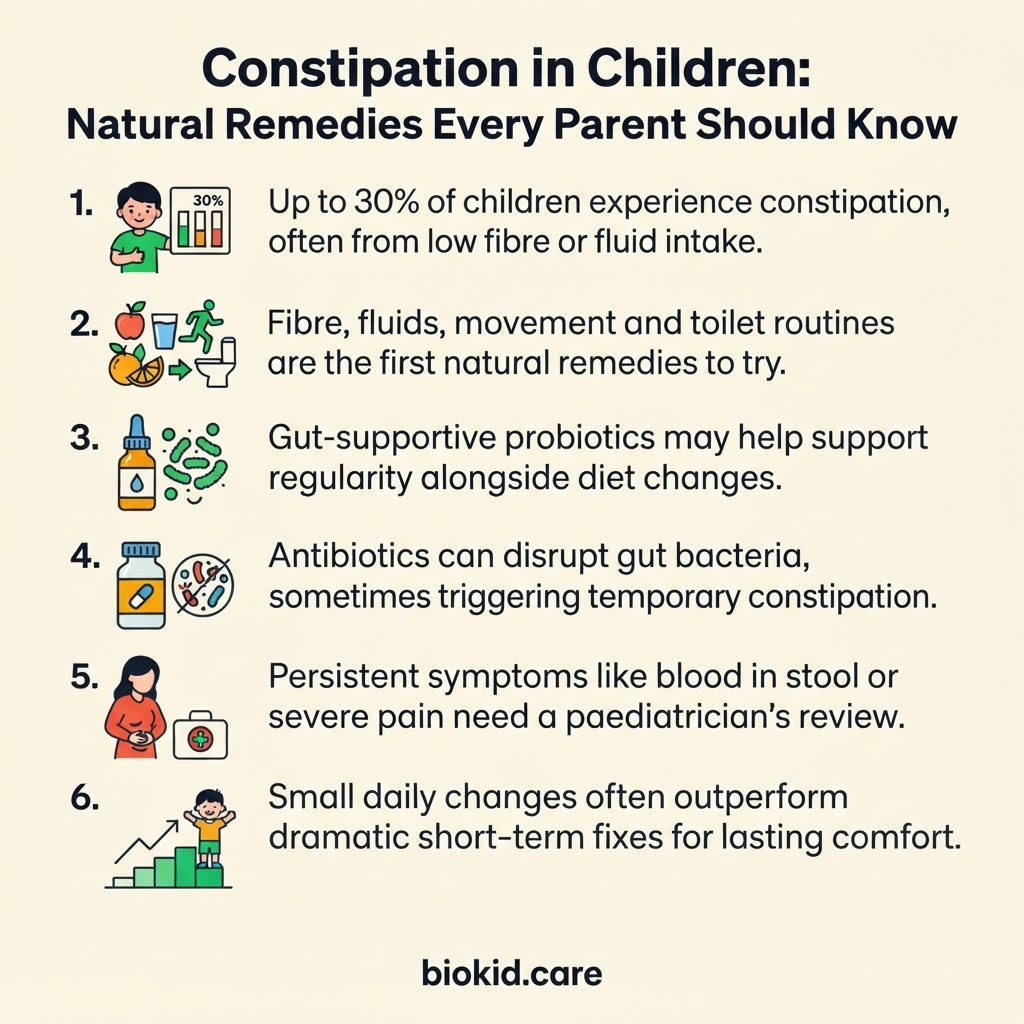
Five gentle, natural steps parents can use today to support healthy bowel regularity in children.
When Constipation Signals Something More
Most childhood constipation is functional — meaning there's no underlying disease, just habits and routine that need adjusting. However, it's important to know when to speak to your paediatrician.
Reach out for medical advice if your child experiences:
- Blood in the stool
- Severe abdominal pain
- Constipation lasting longer than two weeks despite home changes
- Unexplained weight loss
- Vomiting alongside constipation
Research suggests increasing dietary fibre and fluid intake can help many children with functional constipation, though persistent or severe symptoms warrant professional evaluation. — Mayo Clinic, Constipation in Children overview
This is also a good moment to revisit your child's stool patterns using a simple visual tool. Our article on the Bristol Stool Chart for kids can help you describe what you're seeing more accurately to a healthcare provider, which speeds up getting the right support.
The Gut-Immune Link: How Probiotics Support Digestion
A child's gut does far more than digest food — it houses trillions of bacteria that influence immunity, mood, and yes, regularity. When this balance is disrupted, constipation can be one of the first visible signs.
According to the National Center for Complementary and Integrative Health (NCCIH), certain probiotic strains may help support digestive comfort, though research is ongoing and strain-specific.
This is why many parents exploring constipation in children natural remedies turn toward gut-supportive supplements as part of a broader approach — not as a replacement for fibre and fluids, but as added support.
If you're curious about how specific bacterial strains work, our detailed breakdown of BioKid's ingredients and strains explains what's inside and why it was chosen for children's developing digestive systems.
For a deeper dive into fibre and fermented foods working together with good bacteria, see our complete gut-friendly nutrition plan for children.
Lunchboxes, School Days and Tummy Troubles
School routines can quietly disrupt a child's digestive rhythm. Unfamiliar bathrooms, rushed mornings, and processed lunchbox snacks all play a role.
Simple adjustments that help:
- Pack a piece of fruit and a small water bottle daily
- Avoid relying solely on packaged, low-fibre snacks
- Encourage your child not to "hold it in" at school
- Keep breakfast fibre-rich to kickstart morning motility
Many parents don't realise how closely lunchbox choices and bathroom habits are connected until they start tracking patterns. A week of fibre-focused lunches often makes a noticeable difference within days.
Antibiotics Recovery and Constipation
If your child has recently finished a course of antibiotics, constipation or irregular bowel movements aren't unusual. Antibiotics don't just target harmful bacteria — they can temporarily disrupt the helpful bacteria that support regularity too.
During antibiotics recovery, consider:
- Reintroducing fibre-rich foods gradually
- Offering plenty of fluids
- Speaking to your paediatrician about appropriate probiotic support during or after the course
Our comprehensive guide on children's digestive health recovery walks through this process step by step, including how long gut rebalancing may take.
For families specifically researching supplement options, our best probiotic for kids South Africa buying guide outlines what to look for on a label.
Putting It All Together
There is no single magic fix here. The most effective constipation in children natural remedies combine:
- Consistent fibre intake
- Adequate hydration
- Regular movement and play
- A relaxed toilet routine
- Gut-supportive probiotics where appropriate
Small, sustainable changes tend to outperform dramatic short-term interventions. Children respond well to routine, and digestive regularity is often restored gently rather than suddenly.
If symptoms persist or worsen despite these changes, please speak to your paediatrician promptly — constipation can sometimes point to other underlying issues that need direct medical attention.
Your Simplest First Step
If today feels overwhelming, start with just one change: add one extra glass of water and one extra serving of fibre to your child's day. That's it.
From there, many parents find that introducing a gentle, child-friendly probiotic supports the rest of the process. The BioKid Chewable Probiotics were designed with exactly this kind of everyday gut support in mind — easy for kids to take, and formulated for their developing digestive systems.
Explore more at velobiotics.com, and if you'd like practical, doctor-reviewed gut health guidance delivered straight to your inbox, consider subscribing to the BioKid newsletter — we'd love to support your family's journey toward happier tummies.
Get gut-smart, one email at a time.
Science made simple, practical tips and member-only offers. No spam, unsubscribe anytime.
By subscribing you agree to receive emails from BioKid (Velobiotics). POPIA compliant. Unsubscribe in one click.